Why HS Gets Worse Over Time — and What That Progression Looks Like
A detailed look at the progression trajectory of HS and why early intervention changes long-term outcomes.
Hidradenitis Suppurativa develops from the inside out — driven by gut dysfunction, hormonal imbalance, immune dysregulation, and metabolic disruption. Understanding this changes everything about how it is approached.
HS is not only a clinical condition. For most patients, it shapes how they live — the clothes they can wear, how they move through a room, which social situations they can enter without anxiety, and how they see themselves. Many carry the condition silently for years before it receives a name. That silence, and the weight behind it, is part of what this condition does. Understanding it begins with acknowledging that weight.
What HS Actually IsHidradenitis Suppurativa is a chronic, progressive inflammatory condition that causes recurring painful nodules, abscesses, sinus tracts, and scarring — primarily in skin folds: the underarms, groin, inner thighs, buttocks, and beneath the breasts.
Most people are told it is a skin infection. Some are told it is caused by poor hygiene. Others are handed antibiotics without explanation. The reality is considerably more complex — and considerably more treatable — than those answers suggest.
HS is not caused by bacteria. It is not caused by poor hygiene. It is a systemic inflammatory-metabolic disorder that uses the skin as its primary expression site. The lesions that appear are the endpoint of a process that originates in the gut, hormones, immune system, and metabolism — systems that are rarely examined or addressed in standard dermatological care.
This is why it recurs. When only the lesion is treated, the internal process that created it continues undisturbed — building toward the next flare, and the one after that.
"HS is not a skin problem. It is a systemic inflammatory condition expressing through the skin."
Quick Reference
Also known as
Acne Inversa · Verneuil's Disease
Prevalence
Affects approximately 1% of the global population. Significantly underdiagnosed.
Average diagnosis delay
7–10 years globally
Most affected
Women 3× more than men · Ages 16–40 · PCOS-linked in women
Classification
EPOH-DSS Stage 1, 2, 3, or 4 — based on severity
In Ayurvedic terms: multi-system tissue imbalance (Dushti) across Pitta, Vata and Kapha, combined with obstruction of the body's internal channels (Srotorodha). The full explanation is in the section below.
Why HS patients struggle for years before the right diagnosis
Average delay before correct diagnosis
Most patients spend years in treatments that do not address the real cause.
More common in women
Hormonal involvement plays a major role — especially in chronic or recurring cases.
Have a family history
Genetic susceptibility exists — but it does not mean the condition cannot be controlled.
Most patients on arrival
After conventional treatment has failed — this is where structured care becomes critical.
If this sounds like your journey, it is time to approach HS differently. A structured, root-cause evaluation is the clinically meaningful next step.
Take the HS Subtype AssessmentHS is not caused by a single failure. It develops when multiple body systems lose their coordination over time. Each system amplifies the others. This is why addressing one system alone produces incomplete and temporary results.
When digestive strength weakens — whether from poor diet, irregular eating, or chronic stress — the gut fails to process food cleanly. This produces inflammatory residue that enters the bloodstream and triggers immune activation throughout the body.
The gut–skin axis is well established in modern research: gut dysbiosis directly correlates with skin inflammation severity. In Ayurveda, this is the accumulation of Ama — metabolic toxin — that congests the body's channels and sustains the inflammatory cycle. In many HS patients, gut symptoms like bloating, irregular digestion, and food sensitivities are present years before significant skin involvement begins.
Androgens — particularly testosterone and its derivatives — drive follicular activity. When androgen levels are elevated or follicular sensitivity is heightened, hair follicles undergo increased keratinisation, making occlusion more likely. This is why HS in women often worsens before menstruation, flares in PCOS, and responds to hormonal interventions.
Insulin resistance compounds this: elevated insulin stimulates androgen production and promotes systemic inflammation simultaneously. Addressing HS without evaluating hormonal and metabolic status misses one of the most significant drivers of the condition.
In HS, the immune system's response to a ruptured follicle is profoundly disproportionate to the triggering event. Inflammatory cytokines — TNF-α, IL-1β, IL-17, IL-23 — are elevated at levels comparable to autoimmune conditions. The body is not fighting an infection; it is fighting itself.
This misfiring becomes self-sustaining: each inflammatory episode sensitises the immune response further, lowering the threshold for the next one. Over time, the inflammatory environment itself becomes the trigger — independent of external events. This is the mechanism behind spontaneous flares that patients describe as "coming from nowhere."
The follicle is where HS becomes visible, but it is not where HS begins. Follicular occlusion — blockage and subsequent rupture of the hair follicle — is the proximate trigger of each lesion. The deeper question is why this happens repeatedly in the same locations. The answer lies in tissue vulnerability: sustained inflammation from the other three systems progressively degrades the structural integrity of the follicular environment, making recurrence easier with each cycle.
HS consistently targets areas of high lymphatic density — the axilla, groin, inframammary fold, and perianal region. These are not arbitrary locations. They are sites where lymphatic drainage, immune surveillance, and mechanical friction converge. When lymphatic flow slows — what Ayurveda describes as Srotorodha, obstruction of the body's channels — inflammatory mediators accumulate in the same vulnerable areas where tissue has already been compromised. Modern science calls the structural component follicular occlusion; Ayurveda calls it Srotorodha and Mamsa Dushti. Different vocabulary. The same physiology.
HS is not a Pitta-only condition. It is a tridoshic spiral — Pitta drives the inflammation, Vata dictates tunneling and spread, Kapha determines cyst depth and fibrosis. No single dosha explains it.
Dr. Adil Moulanchikkal — EPOH HS Protocol™
| Dosha | Role in HS | Clinical Expression |
|---|---|---|
| Pitta | Drives inflammation | Abscess formation, burning, tissue breakdown |
| Vata | Governs spread & chronicity | Tunneling, irregular flares, sinus tracts, pain |
| Kapha | Determines depth & fibrosis | Cystic nodules, thick scarring, suppuration |
| Modern Concept | Ayurvedic Equivalent |
|---|---|
| Chronic inflammation | Pitta aggravation |
| Toxin accumulation | Ama |
| Blood involvement | Rakta Dushti |
| Tissue destruction | Dhatu Kshaya |
| Sinus tracts | Srotorodha — channel blockage |
| Weak digestion → inflammation | Agnimandya |
| Modern Concept | Ayurvedic Understanding |
|---|---|
| Chronic systemic inflammation | Pitta aggravation in Rakta and Mamsa dhatus |
| Inflammatory toxin accumulation | Ama — metabolic residue from impaired Agni |
| Blood-based immune activation | Rakta Dushti — contamination of the blood tissue |
| Tissue destruction and scarring | Dhatu Kshaya — progressive tissue depletion |
| Sinus tract formation | Srotorodha — obstructed micro-channels |
| Tissue & lymphatic stagnation at lesion sites | Rasa Dushti — stagnation of interstitial fluid |
| Disease chronicity and spread | Vata involvement — movement of pathology through channels |
| Hormonal androgen sensitivity | Pitta–Meda interaction — fat tissue and metabolic fire |
Different vocabulary. Identical mechanisms. Ayurveda's systems-based diagnosis allows for personalised treatment paths that a single-diagnosis framework cannot accommodate.
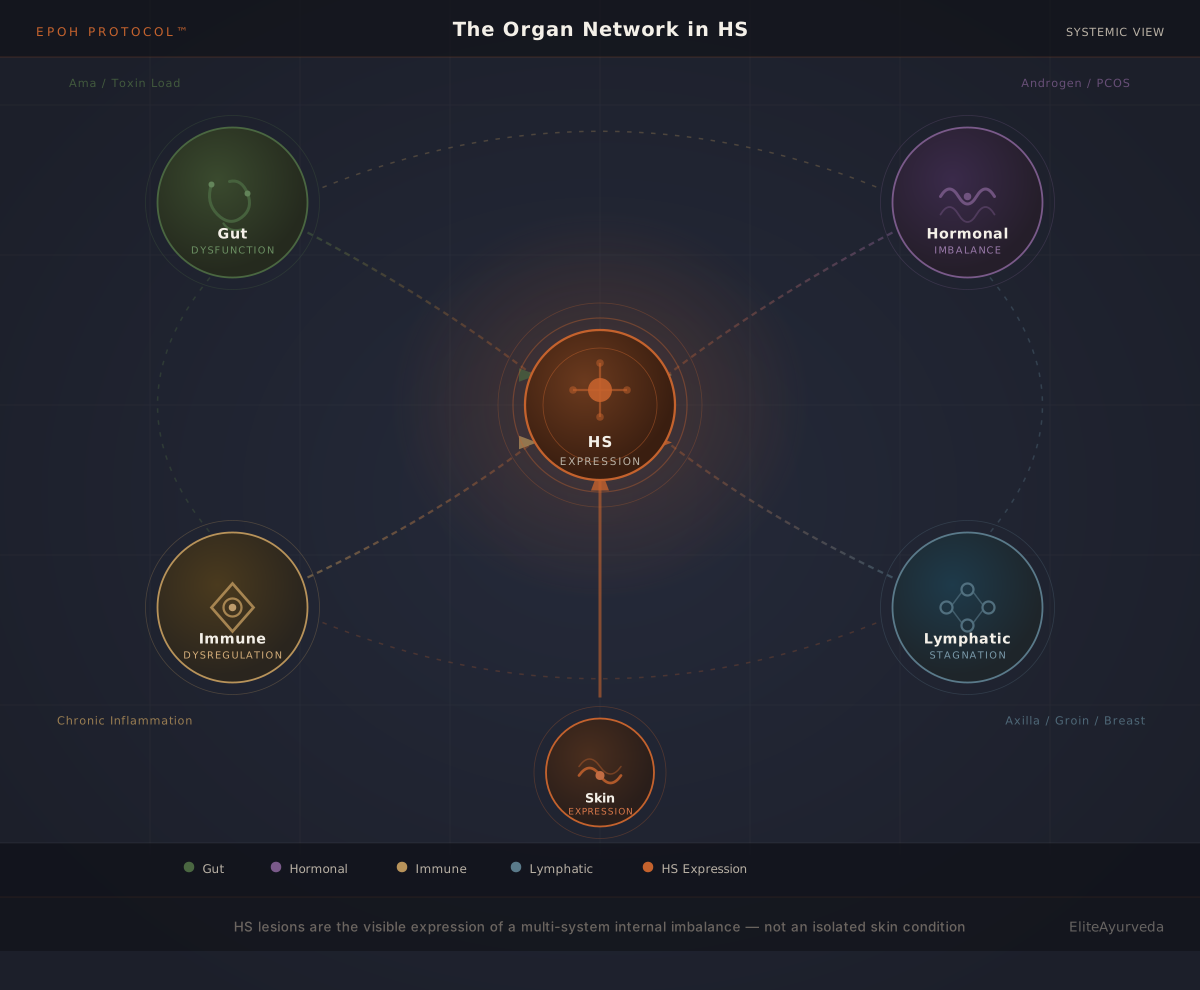
The organ network involved in HS — how gut, hormones, immune system and lymphatics interconnect
This is the question most patients carry for years without a clear answer. Treatment happens — antibiotics suppress the flare, surgery removes the lesion, steroids reduce the swelling. And then, weeks or months later, it returns. Sometimes in the same location. Sometimes adjacent to a healed surgical site. Sometimes somewhere entirely new.
The reason is consistent: the internal process that drives HS has not been interrupted.
Think of it this way. The lesion is the expression — the visible outcome of an internal process. Removing the lesion or suppressing its inflammation temporarily does not stop the process. The gut continues producing inflammatory load. The hormonal imbalance continues driving follicular activity. The immune system continues overreacting to minor triggers. The lymphatic stagnation continues accumulating toxins in the same vulnerable areas.
When the conditions that created the first lesion remain intact, the next lesion is not a question of if — only when. HS does not recur randomly. It follows a pattern determined by the specific combination of internal drivers active in that patient. Identifying and addressing that pattern is what prevents recurrence.
"When a condition keeps recurring, it usually follows an underlying pattern that needs to be understood and addressed — not suppressed."
Why Standard Treatments Produce Recurrence
Address bacterial overgrowth in the lesion, not the inflammatory environment that allowed the lesion to form. Long-term use also disrupts the gut microbiome — worsening one of HS's primary drivers. Learn more about the antibiotic escalation pattern in HS.
Removes the existing lesion or sinus tract. Does not change the internal conditions that created it. New lesions frequently form adjacent to surgical sites because the inflammatory environment persists. Necessary in advanced cases, but not preventive on its own.
Interrupt specific inflammatory pathways (TNF-α, IL-17). Effective suppression in many patients. Do not address gut health, hormonal balance, or metabolic drivers. Recurrence commonly follows discontinuation.
Reduce acute inflammation temporarily. With repeated use, can suppress immune function, disrupt metabolism, and worsen insulin resistance — compounding underlying drivers rather than resolving them.
This is not a dismissal of these treatments. In acute and severe cases, they are necessary. The point is that without internal correction, recurrence is expected regardless of the treatment used.
HS is not a static condition — it follows a predictable trajectory across four clinical stages when underlying drivers remain unaddressed. The EPOH Dynamic Staging System (EPOH-DSS) identifies where a patient is in this spectrum and guides stage-specific treatment decisions.
Early Nodular Stage
Small firm nodules, mild pain, no pus or discharge, no sinus formation. Most reversible stage — timely intervention prevents progression.
Inflammatory Stage
Increased pain, redness, local heat, swelling, early pus formation. Active inflammation — proper management prevents sinus formation.
Sinus Stage
Pus discharge, single sinus tract, temporary relief, recurrence at same site. Chronic stage — structured treatment required to close tract.
Advanced Tunneling Stage
Multiple interconnected sinus tracts, continuous discharge, thickened fibrotic skin, restricted movement. Most advanced stage.
"Early identification of stage allows faster recovery, reduced complications, and a higher chance of long-term remission."
Two patients with the same EPOH-DSS stage can have completely different drivers, triggers, and prognoses. Location, pattern, and associated conditions all determine the treatment approach. Understanding your subtype is the starting point for personalised care.
HS in the underarm — the most common presentation. Friction, sweat, and lymphatic density make this area particularly vulnerable. Often the first site of onset.
Read more → System-LinkedHS strongly linked to PCOS, menstrual cycling, or androgen excess. Often presents in women with clear hormonal trigger patterns. Requires hormonal evaluation as a treatment priority.
Read more → Structural TypeCharacterised by sinus tract development — interconnected channels forming beneath the skin. Associated with Stage II–III and a history of repeated lesion activity in the same sites.
Read more → Location-BasedHS in the groin region — associated with high friction, lymphatic density, and significant impact on daily mobility and quality of life.
Read more → System-LinkedHS strongly associated with insulin resistance, metabolic syndrome, or significant weight. Metabolic correction is central to treatment. Often multi-site with rapid progression.
Read more → All SubtypesThere is an important distinction between a trigger — something that provokes a flare — and a driver — something that sustains the underlying condition. Managing triggers helps in the short term. Addressing drivers prevents recurrence long-term.
Note: identifying which triggers are most active in a specific patient requires clinical evaluation. The same trigger can have different impact on different patients depending on their internal profile and disease stage. Explore cause pages in depth →
Treatment at EPOH uses personalised Ayurvedic formulations — designed based on each patient's systemic profile, disease stage, and dominant drivers. These are not fixed protocols or generic herbal combinations. They are targeted formulations matched to the specific phase of treatment and the specific imbalance being addressed.
Targeted at reducing the active systemic inflammatory burden. Supports the body's natural anti-inflammatory pathways. Used in Phase 1 to interrupt the current flare cycle and create conditions for deeper healing.
Addresses gut dysfunction — the most common primary driver. Corrects digestive strength, reduces inflammatory toxin production, and restores microbiome balance. Personalised to the specific type of gut imbalance identified.
Supports targeted elimination of accumulated inflammatory toxins. Works through enhanced hepatic and lymphatic clearance pathways. Calibrated to patient constitution — aggressive detox is counter-productive in most HS cases.
Specifically relevant for women with PCOS-linked or menstrual-cycle-driven HS. Addresses androgen sensitivity and insulin–hormone interaction. This formulation is only prescribed where hormonal involvement is confirmed through evaluation.
Supports healing of sinus tracts, reduces scarring, and restores follicular environment integrity. Used once internal correction is underway — applying this phase too early, before systemic correction, produces limited results.
Long-term immunity-strengthening formulation. Builds systemic resilience, reduces susceptibility to flare triggers, and maintains the gains achieved through earlier phases. Continued as part of the sustained remission protocol.
Important: Formulations are prescribed only after a personalised evaluation. What is appropriate for one patient's profile may be contraindicated for another's. No formulation is available as an OTC product. Treatment commences only after clinical assessment.
If HS is recurring despite treatment, or if you are trying to understand what is actually driving it before it progresses further — a structured evaluation is the appropriate next step. This is a clinical conversation, not a sales process.
Dr. Adil Moulanchikkal, BAMS · EPOH · +91 88847 22246 · Personalised evaluation required before treatment begins
A detailed look at the progression trajectory of HS and why early intervention changes long-term outcomes.
Explains the gut–skin axis and why gut dysfunction is a primary driver in most HS patients.
Honest framing of what remission in HS looks like, what it requires, and what realistic expectations involve.